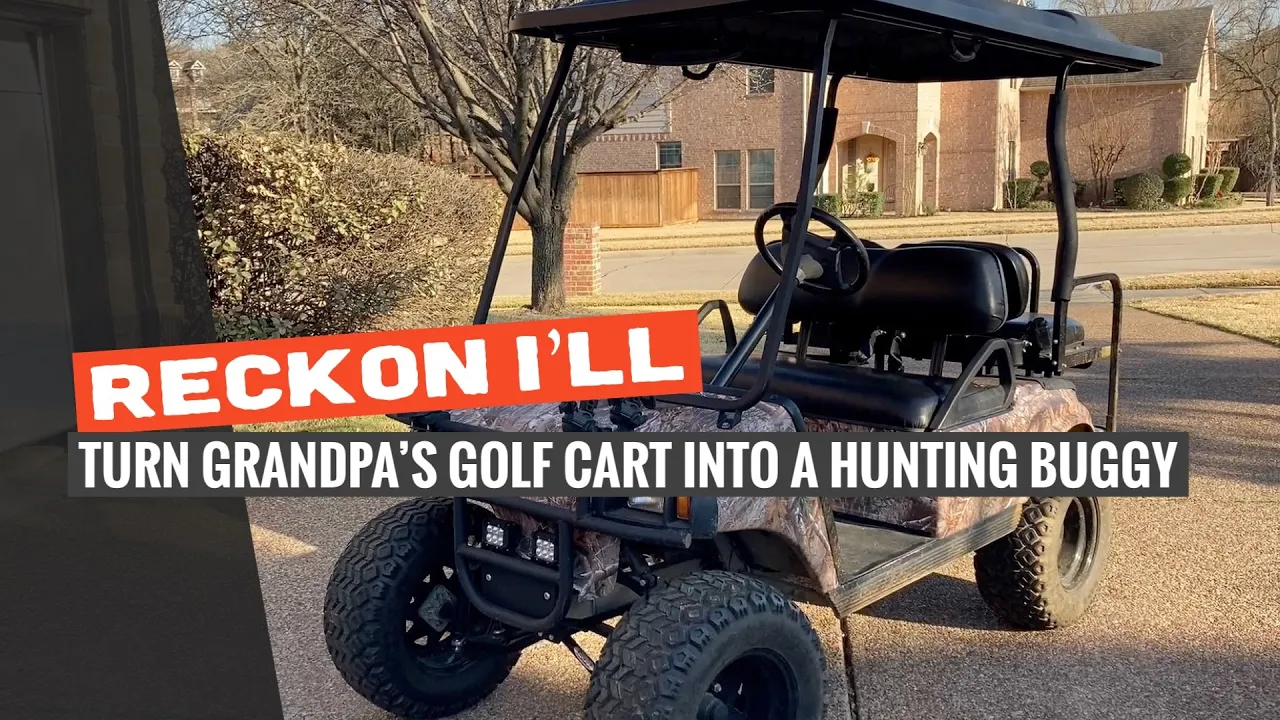
DIY: Transform Grandpa’s Golf Cart Into a Hunting/Fishing Buggy

I only recommend products I believe in and use myself. If you purchase something using a link to an item on a post, I may earn a small commission at no additional cost to you. Read More

Shortly after my parents bought a rural property for hunting and fishing, I started dreaming of a “hunting buggy” to cart the family around. My "wants" were specific: minimal noise (electric), room for five, high-torque for steep terrain, and good ground clearance. What I quickly learned was the best way to get what I want—and keep costs down—was to build it myself.

I settled on a 2006 Club Car DS. It has an aluminum frame, meaning rust is non-existent, even though my wife originally doubted this "old man golf cart."
Phase 1: Clean Up and Battery Tray Repair

The stock battery trays were paper-thin from leaking acid. Since I don't weld aluminum, I used a rivet-based fix.

Materials Needed

  • 1 1/2″ Aluminum Angle

  • Aluminum Rivets & Rivet Gun

  1. Remove Trays: Grip the angle iron near the welds with Channel-lock pliers and pry upward until the welds pop.

  2. Fabricate: Measure the span and cut the aluminum angle. Use the old trays as a template to cut holes for the battery tie-downs.

  3. Install: Clamp the new angle in place, drill your holes, and pop-rivet them to the frame.

Phase 2: Motor and Battery Upgrade

This is the biggest jump in performance. To handle a high-torque motor, you must upgrade the controller, solenoid, and cables to manage the extra amps.

Materials Needed

  • Admiral A4 Motor & Alltrax XCT 500 Amp Controller

  • Solenoid (400 Amp) with fuse/diode

  • 2 Gauge Cable Set

  • Trojan Ranger 160 Batteries

  1. Safety: Always place the cart in TOW mode.

  2. Strip Components: Remove the batteries, rear body, stock controller, and motor.

  3. Prep Spindle: Clean the build-up off the motor spindle and lightly lubricate with white lithium grease.

  4. Install: Mount the new motor (you may need to drop the rear axle to fit the A4). Use the controller/solenoid as a template to drill mounting holes in the aluminum.

  5. Dial-In: Connect the Alltrax controller to a computer via USB to customize your acceleration and torque profiles.

Phase 3: Suspension Upgrade (6" Lift)

Lifting the rear is the most frustrating part, involving "the flip" (moving the axle under the leaf springs).

Materials Needed

  • DS Super Sport 6″ Lift Kit

  • Heavy Duty Dual Action Springs & Urethane Bushings

  • 23×10.5×12 RHOX Mojave Tires & Metric Hubs

  • Monroe 31176 Shocks

Front-End: Remove stock hubs and A-Arms. Install the lift kit leaf spring plate, new A-Arms, and spindles.
Rear-End: 1. The Flip: Switch the driver and passenger-side axle shafts. This allows you to flip the brake assemblies to gain travel distance for the cables.
2. Modify: Cut the extended tabs off the stock brake plates and enlarge the center hole to 1/2”.
3. Stack: Assemble the lift block stack (U-Bolts, Top Plate, HD Spring, Flipped Brake Plate, Axle, and Bottom Plate).
4. Differential: While you're here, drain the old differential oil and fill with 1L of fresh oil.

Phase 4: Exterior and Body Upgrade

This is where the buggy starts to look like it belongs on a showroom floor.

Materials Needed

  • RealTree Edge 3M Vinyl Wrap & 3M Knifeless Tape

  • JB Weld Plastic Filler

  • Truck Bed Liner Spray (for trim)

  • Black Vinyl & Pneumatic Stapler (for seats)

  1. Trim: Prime bare metal and paint all trim and roof supports with black bedliner.

  2. Body Prep: Fill gouges with JB Weld Plastic Filler and sand to 1000 grit. Clean with RapidTac and Isopropyl Alcohol.

  3. Wrap: Use knifeless tape to define your seams. Work slowly with a heat gun to install the vinyl sections (cowl, sides, and bagwell).

  4. Post-Heat: Use a heat gun to heat the entire vinyl surface to 200-225 degrees to "lock" it in.

  5. Seats: Remove old staples, cut new black vinyl, and stretch it tight over the cushions using a heat gun and pneumatic stapler.

Phase 5: Electrical and "Stealth Mode"

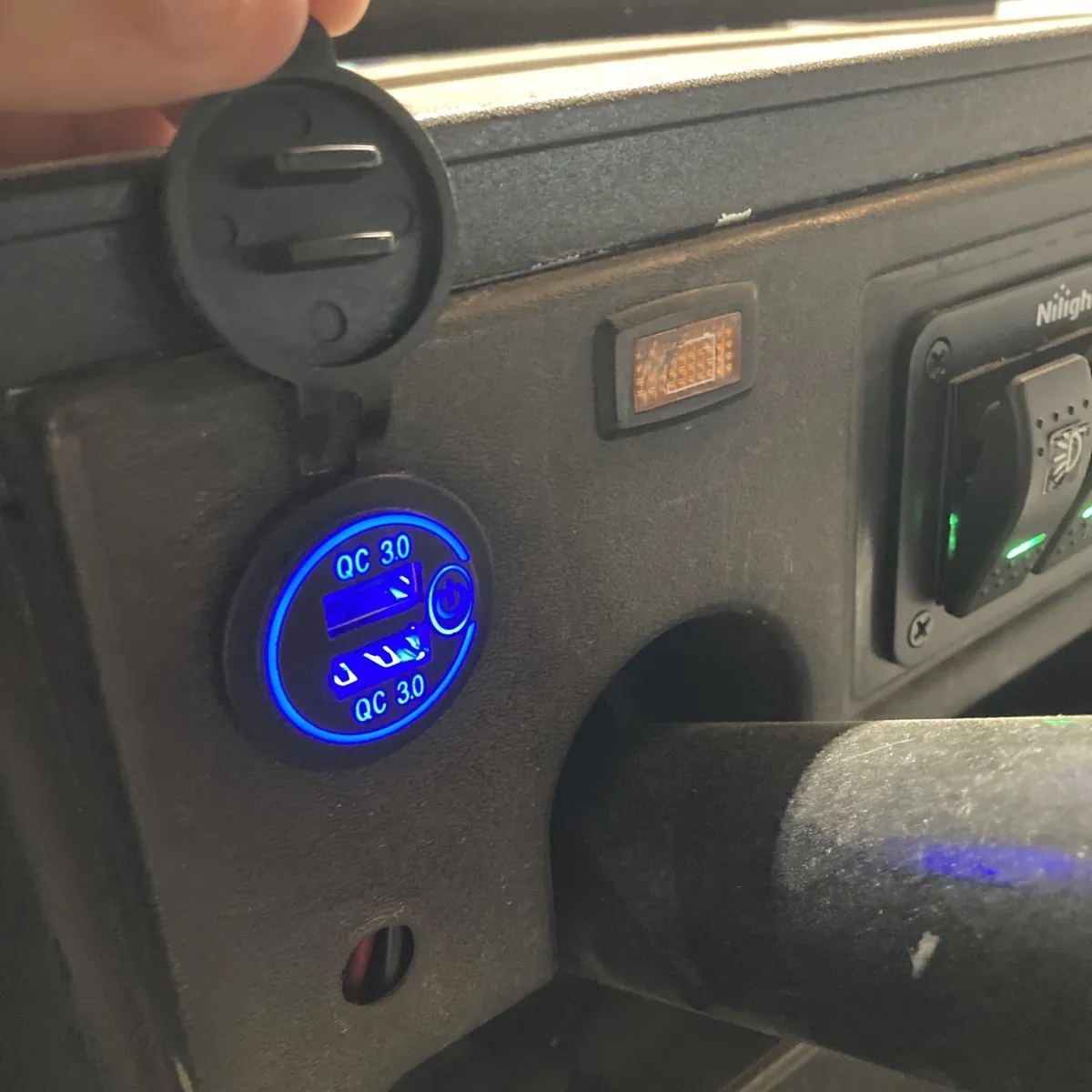
I installed a voltage reducer to pull 12V equally across the 48V pack, preventing uneven battery drain.

Key Features

  • Voltage Reducer: Wired to the ignition so it turns on with the key.

  • Buzzer "Stealth Mode": I used a 5-pin relay so the reverse buzzer is active by default but can be disabled via a rocker switch for silent entry while hunting.

  • Lighting: Green fog lights (for hog hunting) mounted on a new front brush guard.

Relay Summary for Stealth Mode:

  • Wire the switch to Pin #86, Ground to #85.

  • Wire the 48V ignition to Normally Closed (#87a) and the buzzer to Common (#30).

  • Result: Activating the switch breaks the circuit, silencing the buzzer.

Wrapping Up

Final accessories included an 88″ Extended Top to cover the new Steeling Rear Seat and Rhino Grip XLr holders for bows or rifles. The result is a silent, high-torque machine ready for the Texas woods!

DIY: Transform Grandpa’s Golf Cart Into a Hunting/Fishing Buggy

I only recommend products I believe in and use myself. If you purchase something using a link to an item on a post, I may earn a small commission at no additional cost to you. Read More

Shortly after my parents bought a rural property for hunting and fishing, I started dreaming of a “hunting buggy” to cart the family around. My "wants" were specific: minimal noise (electric), room for five, high-torque for steep terrain, and good ground clearance. What I quickly learned was the best way to get what I want—and keep costs down—was to build it myself.

I settled on a 2006 Club Car DS. It has an aluminum frame, meaning rust is non-existent, even though my wife originally doubted this "old man golf cart."
Phase 1: Clean Up and Battery Tray Repair

The stock battery trays were paper-thin from leaking acid. Since I don't weld aluminum, I used a rivet-based fix.

Materials Needed

  • 1 1/2″ Aluminum Angle

  • Aluminum Rivets & Rivet Gun

  1. Remove Trays: Grip the angle iron near the welds with Channel-lock pliers and pry upward until the welds pop.

  2. Fabricate: Measure the span and cut the aluminum angle. Use the old trays as a template to cut holes for the battery tie-downs.

  3. Install: Clamp the new angle in place, drill your holes, and pop-rivet them to the frame.

Phase 2: Motor and Battery Upgrade

This is the biggest jump in performance. To handle a high-torque motor, you must upgrade the controller, solenoid, and cables to manage the extra amps.

Materials Needed

  • Admiral A4 Motor & Alltrax XCT 500 Amp Controller

  • Solenoid (400 Amp) with fuse/diode

  • 2 Gauge Cable Set

  • Trojan Ranger 160 Batteries

  1. Safety: Always place the cart in TOW mode.

  2. Strip Components: Remove the batteries, rear body, stock controller, and motor.

  3. Prep Spindle: Clean the build-up off the motor spindle and lightly lubricate with white lithium grease.

  4. Install: Mount the new motor (you may need to drop the rear axle to fit the A4). Use the controller/solenoid as a template to drill mounting holes in the aluminum.

  5. Dial-In: Connect the Alltrax controller to a computer via USB to customize your acceleration and torque profiles.

Phase 3: Suspension Upgrade (6" Lift)

Lifting the rear is the most frustrating part, involving "the flip" (moving the axle under the leaf springs).

Materials Needed

  • DS Super Sport 6″ Lift Kit

  • Heavy Duty Dual Action Springs & Urethane Bushings

  • 23×10.5×12 RHOX Mojave Tires & Metric Hubs

  • Monroe 31176 Shocks

Front-End: Remove stock hubs and A-Arms. Install the lift kit leaf spring plate, new A-Arms, and spindles.
Rear-End: 1. The Flip: Switch the driver and passenger-side axle shafts. This allows you to flip the brake assemblies to gain travel distance for the cables.
2. Modify: Cut the extended tabs off the stock brake plates and enlarge the center hole to 1/2”.
3. Stack: Assemble the lift block stack (U-Bolts, Top Plate, HD Spring, Flipped Brake Plate, Axle, and Bottom Plate).
4. Differential: While you're here, drain the old differential oil and fill with 1L of fresh oil.

Phase 4: Exterior and Body Upgrade

This is where the buggy starts to look like it belongs on a showroom floor.

Materials Needed

  • RealTree Edge 3M Vinyl Wrap & 3M Knifeless Tape

  • JB Weld Plastic Filler

  • Truck Bed Liner Spray (for trim)

  • Black Vinyl & Pneumatic Stapler (for seats)

  1. Trim: Prime bare metal and paint all trim and roof supports with black bedliner.

  2. Body Prep: Fill gouges with JB Weld Plastic Filler and sand to 1000 grit. Clean with RapidTac and Isopropyl Alcohol.

  3. Wrap: Use knifeless tape to define your seams. Work slowly with a heat gun to install the vinyl sections (cowl, sides, and bagwell).

  4. Post-Heat: Use a heat gun to heat the entire vinyl surface to 200-225 degrees to "lock" it in.

  5. Seats: Remove old staples, cut new black vinyl, and stretch it tight over the cushions using a heat gun and pneumatic stapler.

Phase 5: Electrical and "Stealth Mode"

I installed a voltage reducer to pull 12V equally across the 48V pack, preventing uneven battery drain.

Key Features

  • Voltage Reducer: Wired to the ignition so it turns on with the key.

  • Buzzer "Stealth Mode": I used a 5-pin relay so the reverse buzzer is active by default but can be disabled via a rocker switch for silent entry while hunting.

  • Lighting: Green fog lights (for hog hunting) mounted on a new front brush guard.

Relay Summary for Stealth Mode:

  • Wire the switch to Pin #86, Ground to #85.

  • Wire the 48V ignition to Normally Closed (#87a) and the buzzer to Common (#30).

  • Result: Activating the switch breaks the circuit, silencing the buzzer.

Wrapping Up

Final accessories included an 88″ Extended Top to cover the new Steeling Rear Seat and Rhino Grip XLr holders for bows or rifles. The result is a silent, high-torque machine ready for the Texas woods!