DIY: Save Your Fish Bites and Fish Gum from Going Bad and Other Tips for Winterizing Your Surf Gear
I only recommend products I believe in and use myself. If you purchase something using a link to an item on a post, I may earn a small commission at no additional cost to you. Read More
Hunting season might be starting, but before you hang up the rods, taking a few steps to winterize your surf gear will save you a lot of headache (and money) next spring. Saltwater is brutal on equipment, and standard storage often isn't enough to protect your investments.
Related Posts
DIY: Build A Tackle Storage System On A Surf Fishing Cart
DIY: Build a No-Weld Fishing Sand Spike That Will Stand Up to the Surf
DIY: Make a Surf Fishing Sand Spike That Stands Up to a Tsunami
DIY: Trick Out An Aluminum Pull Cart for Fishing the Surf
DIY: Build a Pump to Summon Ghost Shrimp to the Surface Fast!
Tip #1: Prevent Your Fish Bites and Fish Gum from Going Bad
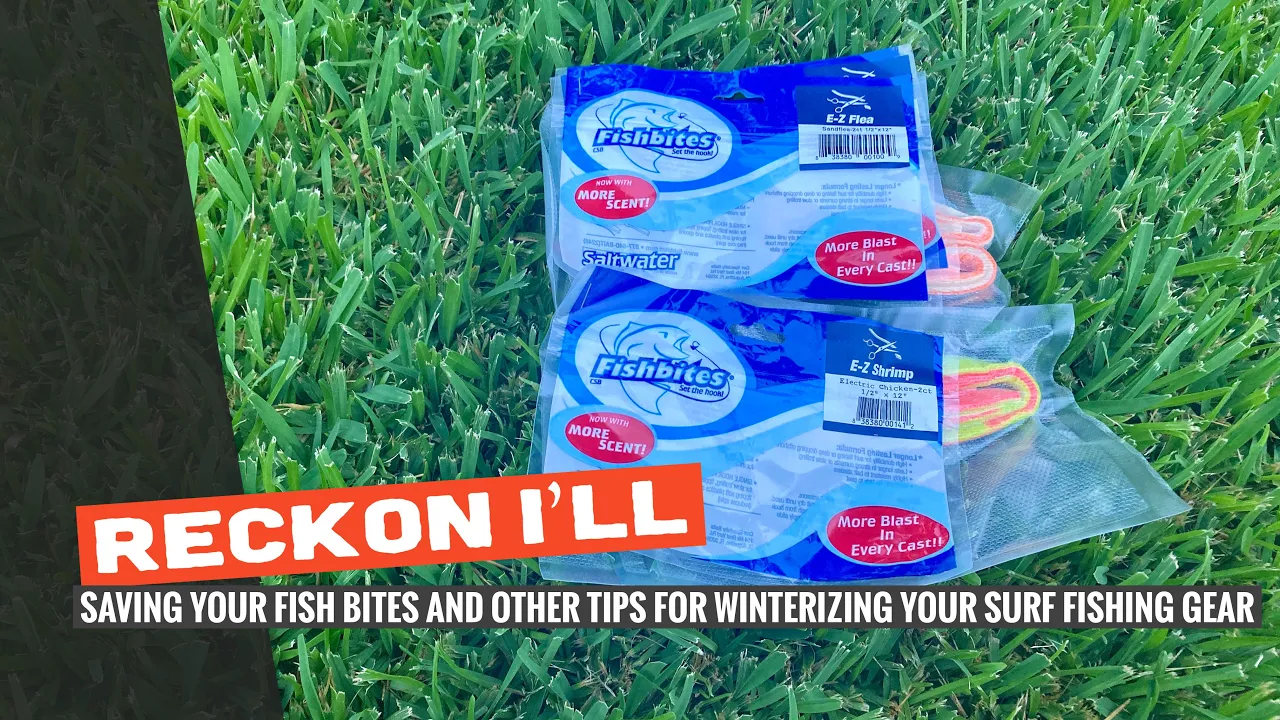
If you’ve ever used Fish Bites, you know they have a tendency to turn a nasty gray color and dry out if they aren't protected from the elements. This happens because the original bags aren't truly airtight. A trick I use to combat this is to store any unused Fish Bites in vacuum-sealed bags until the next trip. [00:43]
Simply remove the Fish Bites from the package, place them in a vacuum bag, and seal it. I like to staple the original package to the outside of the sealed bag so I know exactly what’s inside when I'm ready to hit the surf again. [01:03]
Tip #2: Keep Your Bearings Blazing
Saltwater is incredibly hard on bearings. Even if you're careful, salt and sand inevitably find their way inside. After every trip, I pull the bearings—usually at least three in a standard spinning reel—to clean them thoroughly. [01:31]
My favorite trick is to soak and douse the bearings in lighter fluid. It gets all the gunk, old grease, and salt out extremely quickly. You can actually see the sand particles coming out into the fluid. Once they spin freely and the fluid evaporates, add a tiny drop of oil for protection before reassembling. [02:02]
Tip #3: Change Out Your Old Line
Much like bearings, saltwater and the sun can compromise your line quickly, making it feel brittle and weak. After a trip to the surf, I use a line stripper to remove the weathered top layer. [03:33]
Tip: Save Money on Line
Rather than replacing your whole spool, you don't have to strip it all the way down. Leave about a quarter of the old line on the reel as backing. I strip off the brittle stuff now, then right before the next trip, I'll use a double uni-knot to tie fresh line to the old backing. [03:45]
Materials Needed
(May Contain Links that Earn Commission)