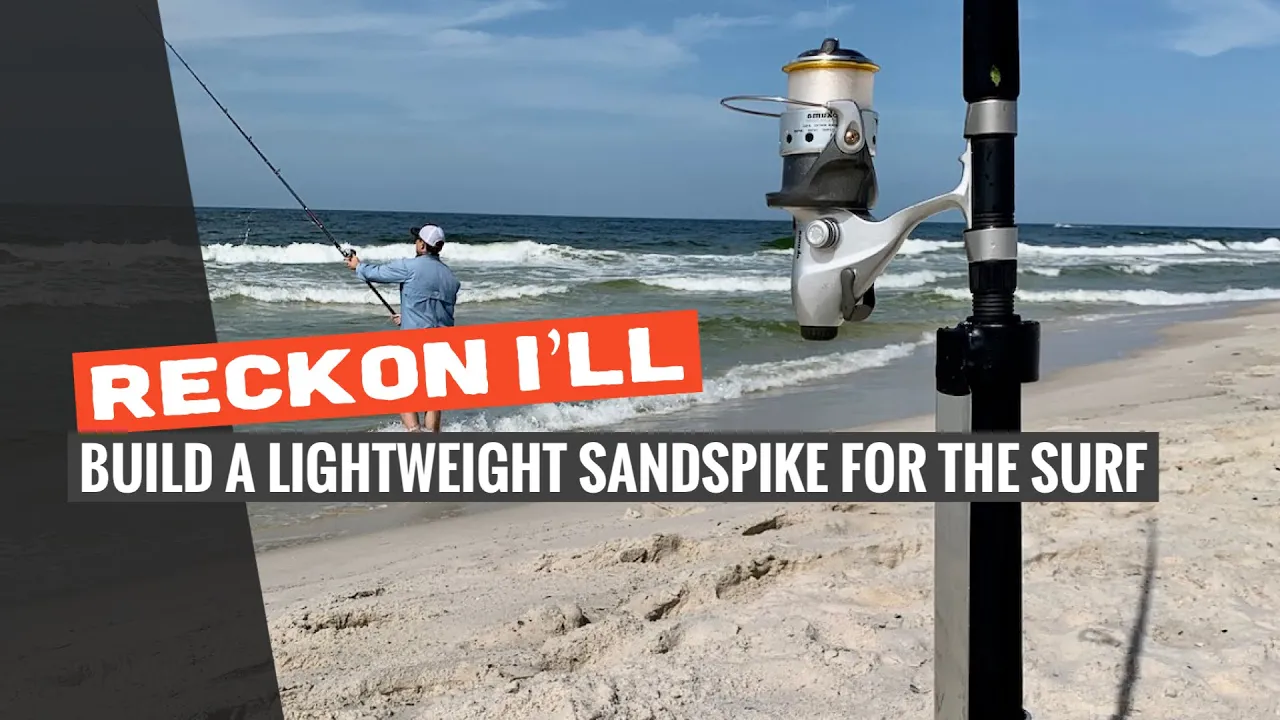
DIY: Make a Surf Fishing Sand Spike That Stands Up to a Tsunami
I only recommend products I believe in and use myself. If you purchase something using a link to an item on a post, I may earn a small commission at no additional cost to you. Read More
Warning: This project involves metal cutting, grinding, and welding. Always wear appropriate personal protective equipment, including safety glasses and a welding mask. Ensure your workspace is well-ventilated. Full Disclaimer
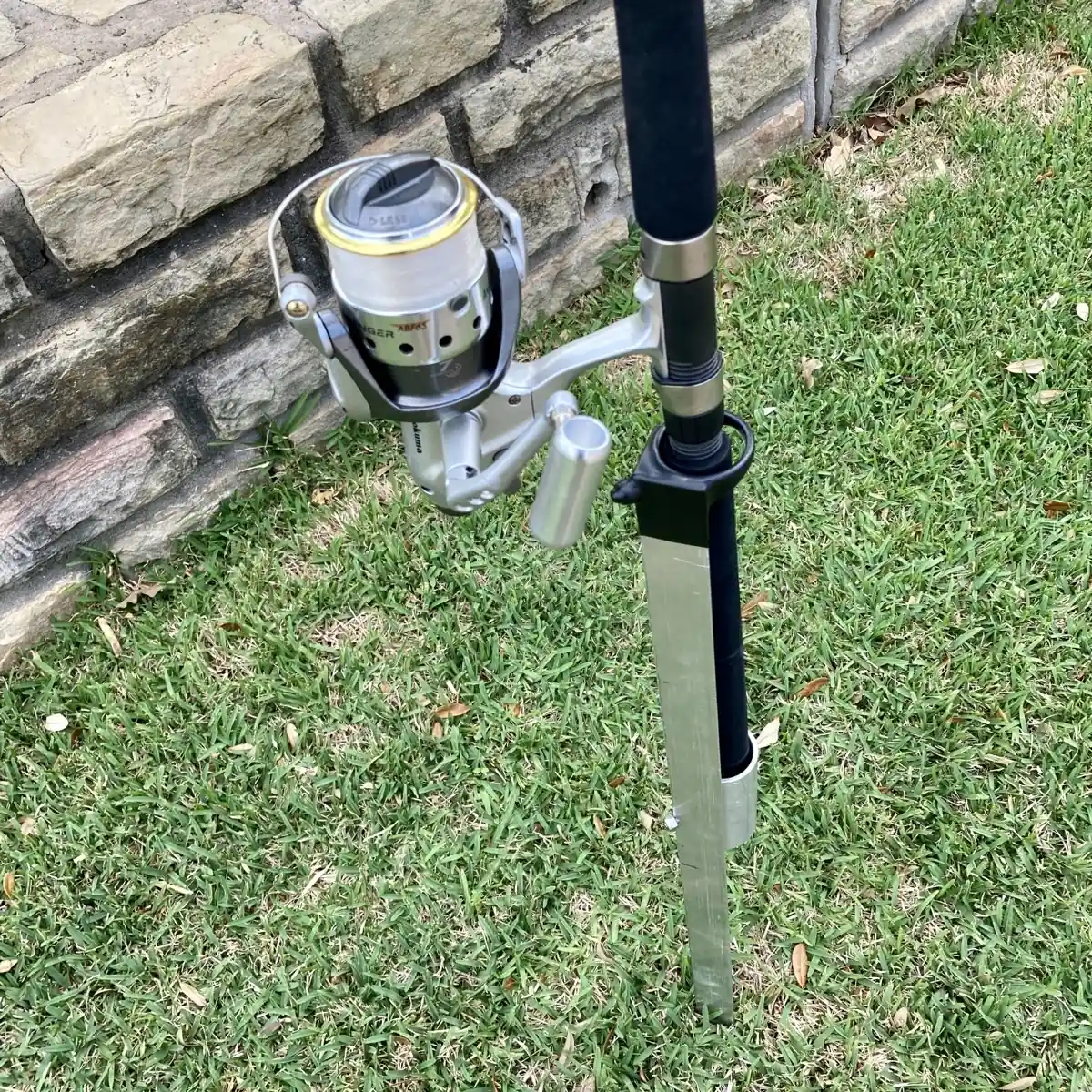
After 30 years, the sand spike I’d used since I was a kid finally started to crack. Instead of buying a cheap replacement, I looked around the garage and found enough scrap to build a custom, lightweight version that should last another few decades. This aluminum sand spike is perfect for the surf or for catfishing at the lake.
Step 1: Make the Cuts
Start by cutting your aluminum angle and tubing to the following lengths:
36-inch length of angle: This forms the main body of the spike.
4-inch length of round tube: This will be the main base of the rod holder. [00:00:37]
2-inch length of round tube: This will act as the top guide.
Using sections of tube rather than one long, continuous piece saves a significant amount of weight while still providing plenty of stability for the rod.
Step 2: Point and Prep
To make it easier to drive the spike into compacted sand, you’ll need to cut a point onto one end of the 36-inch aluminum angle. [00:00:47] Once the point is cut, use a grinder to smooth out the edges and remove any sharp burrs. This prevents the metal from catching on your gear or your hands during transport. [00:00:53]
Step 3: Assembly
Next, you need to add a "stop" to the bottom of the 4-inch tube so the rod doesn't slide all the way through. I welded a small piece into the bottom of the tube using a spool gun. [00:01:06]
Once the stop is in place, weld (or secure) the 4-inch tube toward the bottom of your rod-holding section and the 2-inch "guide" tube toward the top. This two-point contact system holds the rod butt securely in place. [00:01:11]
Step 4: Protect the Rod Handle
Raw aluminum edges can be tough on rod handles. To create a soft, protective surface, I used Plasti Dip.
Pour some Plasti Dip into a small container.
Dip the top guide and the rim of the bottom holder into the liquid. [00:01:30]
Let it dry to create a durable, rubberized coating that prevents the metal from scratching your rod.
Wrapping Up
This sand spike is incredibly light, rust-proof, and custom-built to the length I prefer. It’s a great way to use up aluminum scrap and create a high-quality piece of gear that outperforms most store-bought options.
How do you keep your rods out of the sand? Let me know in the comments!
Materials Needed
(May Contain Links that Earn Commission)
•
1.5" Aluminum Angle: One 36-inch length.•
2" Aluminum Round Tube: One 4-inch length and one 2-inch length•
Plasti DipTools Needed
(May Contain Links that Earn Commission)