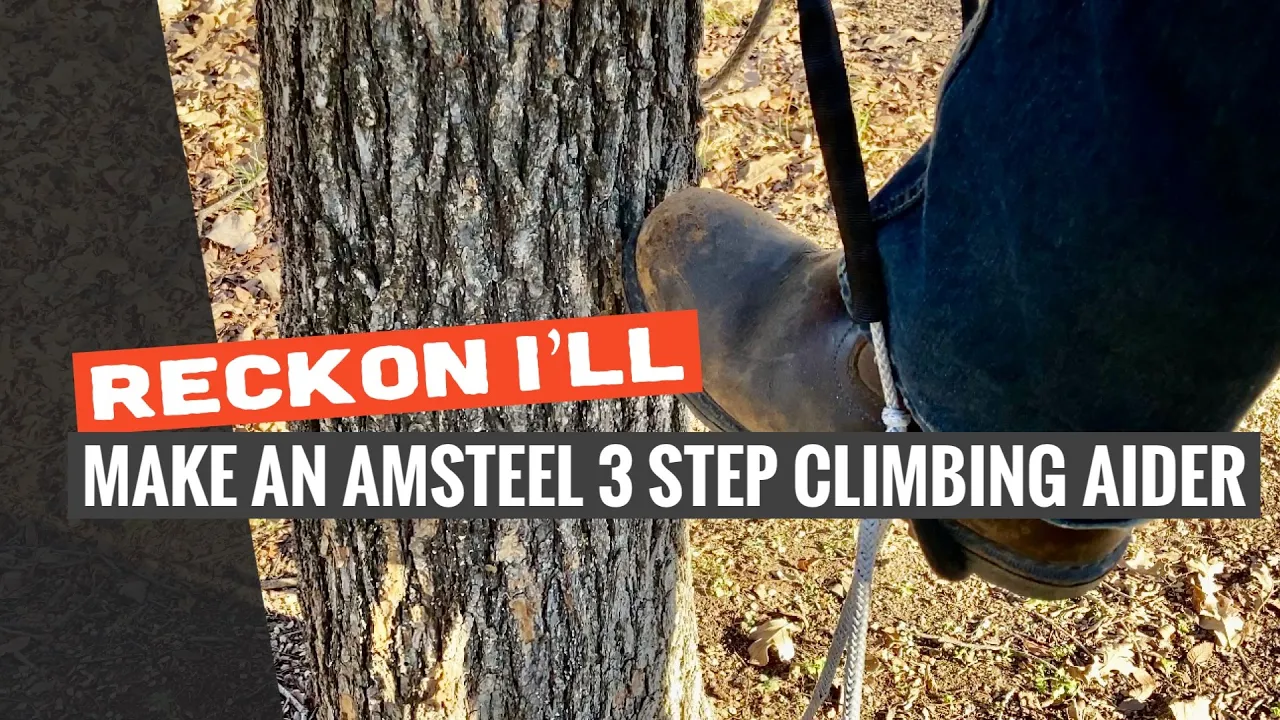
DIY: Tie A Multi-Step Aider for Getting Higher in the Tree
I only recommend products I believe in and use myself. If you purchase something using a link to an item on a post, I may earn a small commission at no additional cost to you. Read More
Warning: Homemade climbing gear should be tested at ground level before being used in a tree. Ensure all splices are properly locked and buried to maintain the integrity of the Amsteel. This post is for informational purposes only; hunt at your own risk.
I’ve been using my current aider system successfully for two seasons now, but lately I’ve been looking for ways to lighten up my pack. One way was to drop a stick or two by introducing a multi-step aider. This method allows you to string together multiple independent aider steps in a modular daisy-chain.
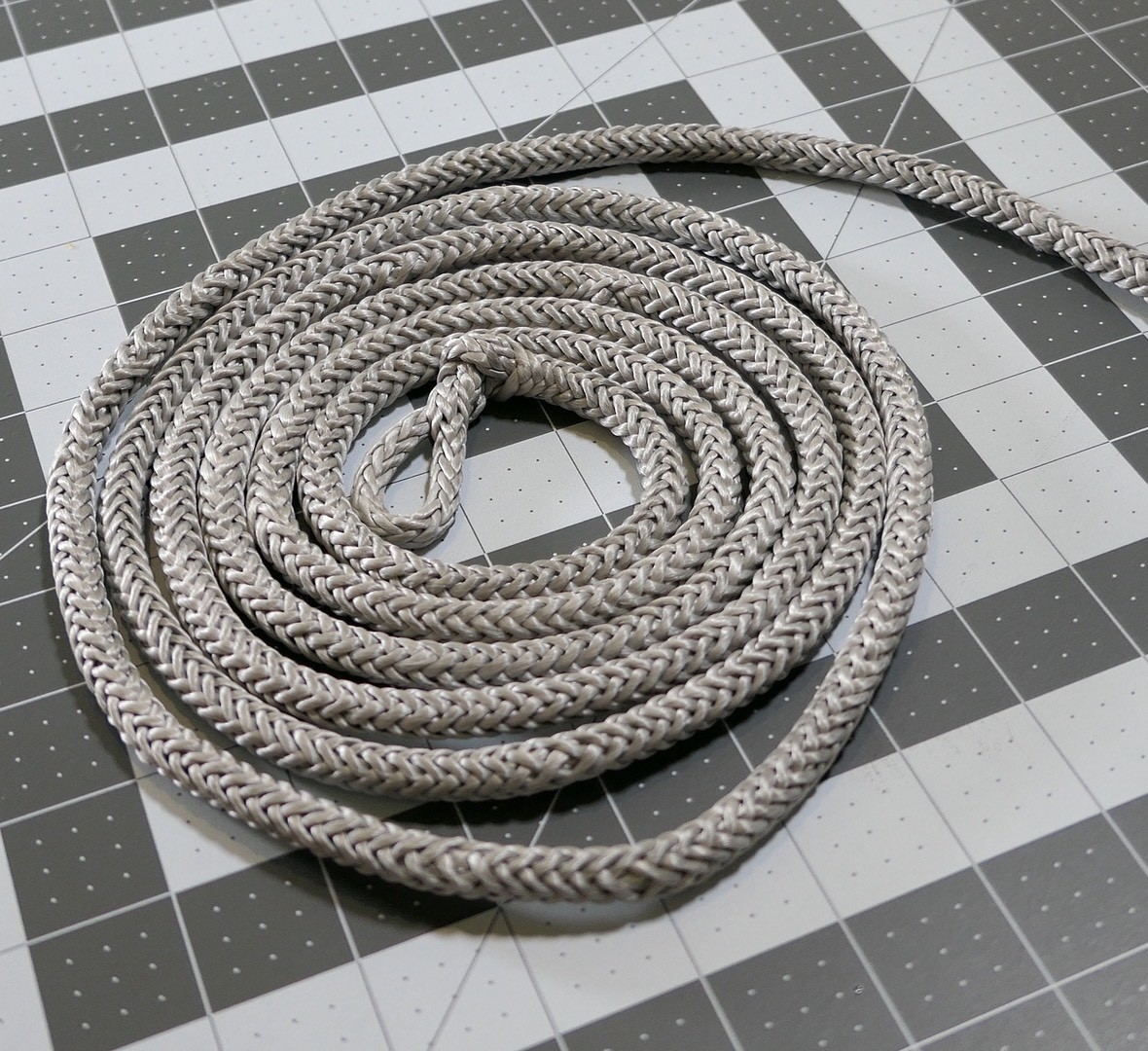
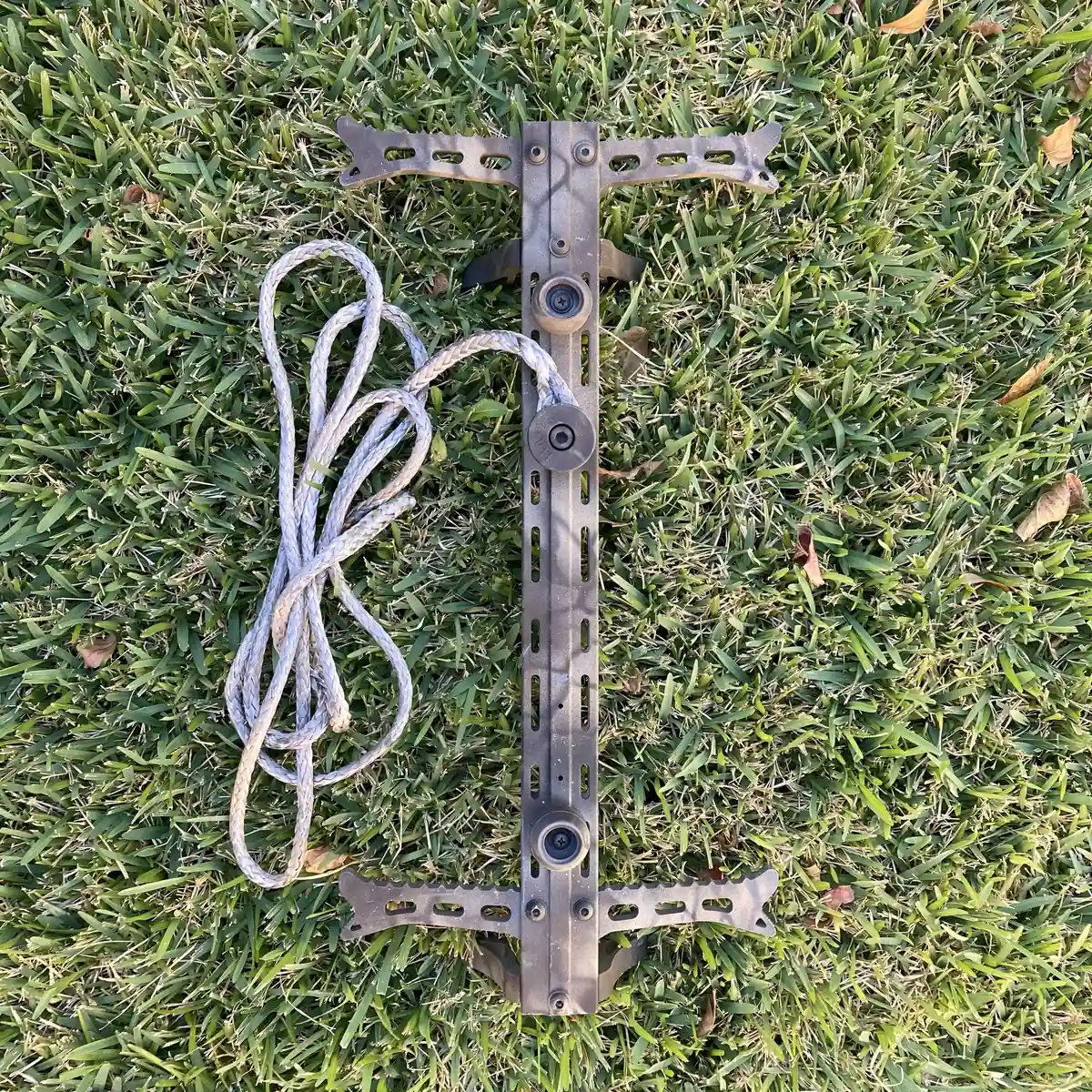
Step 1: Measure and Cut Amsteel
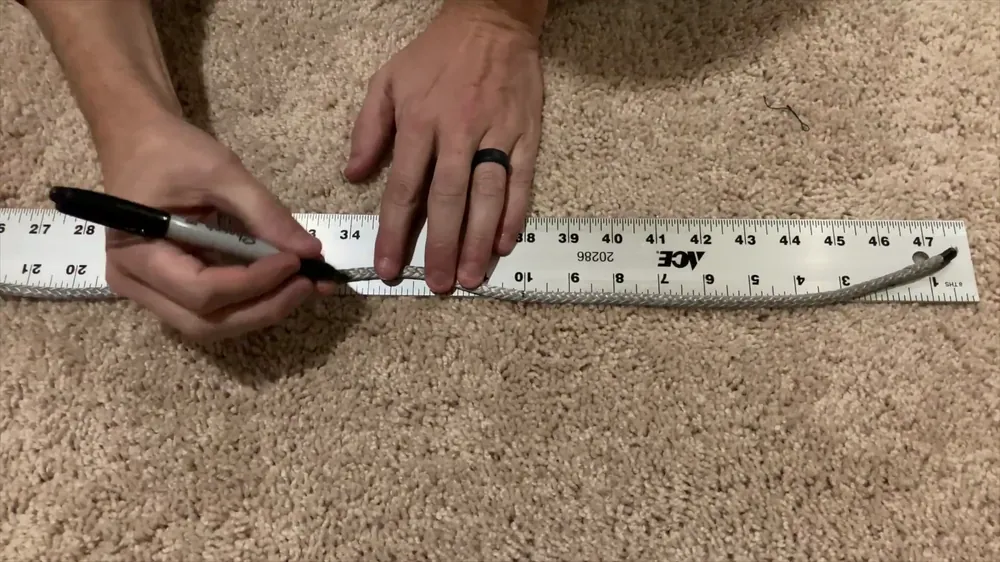
To tie an 18″ aider, cut an 83″ length of Amsteel and make the following marks starting from one end: 10″ (bury), 4″ (loop), 22.5″ (side), 10″ (step), 22.5″ (side), 4″ (loop), and 10″ (bury). The extra length on the sides accommodates shrinkage during the burying process. [00:00:23]
Step 2: Tie a Brummel Splice
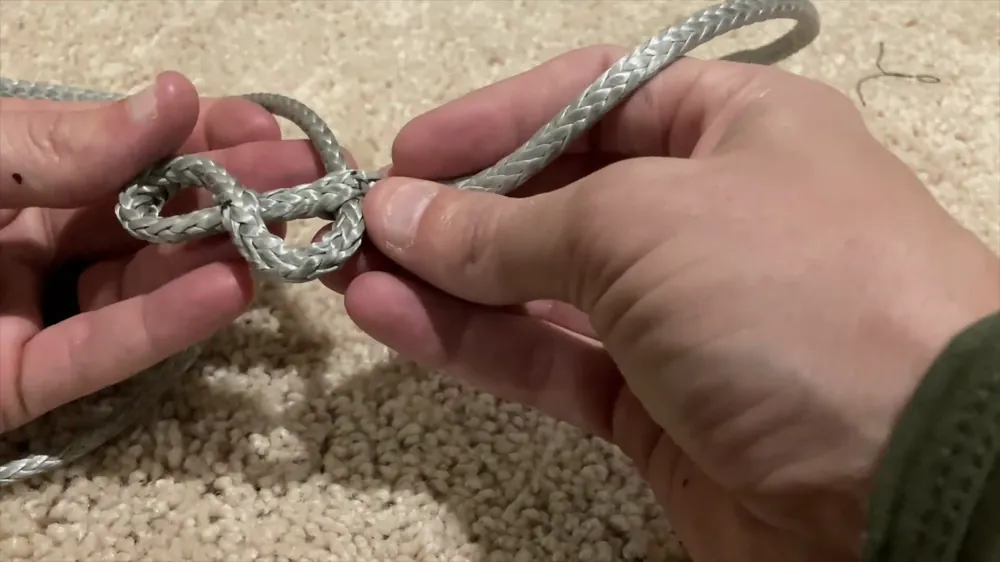
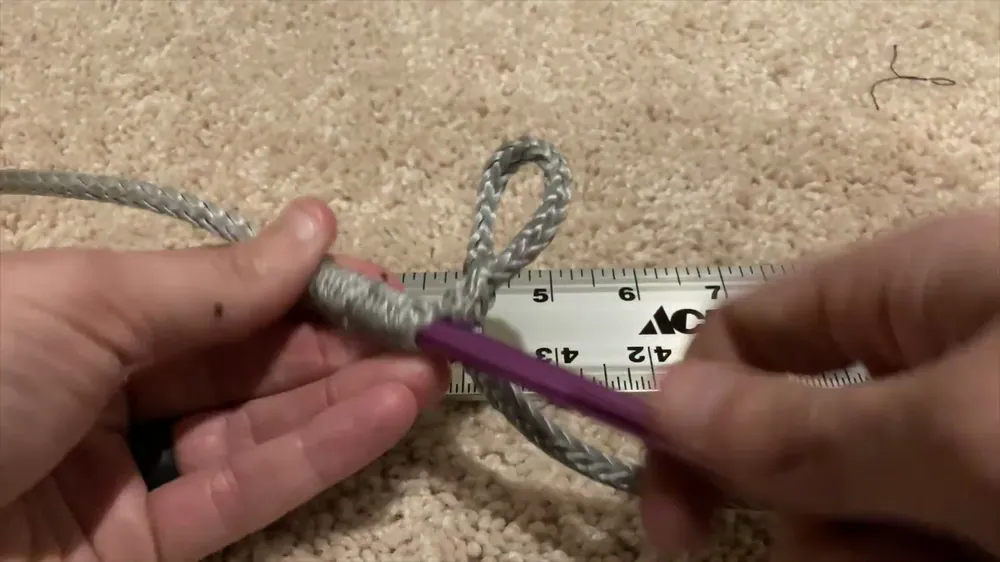
On the first end, create a locked Brummel splice by passing the long tag end through the Amsteel at your 4″ and 10″ marks to form a permanent loop. This loop will eventually hang on your stick or connect to another aider. [00:01:25]
Step 3: Bury the Tag
Using a knitting needle as a fid, bury the 10″ tag end back into the main line below the splice. Smooth the Amsteel down to "swallow" the tag for a clean finish. [00:01:46]
Step 4: Add the Fuel Line Step
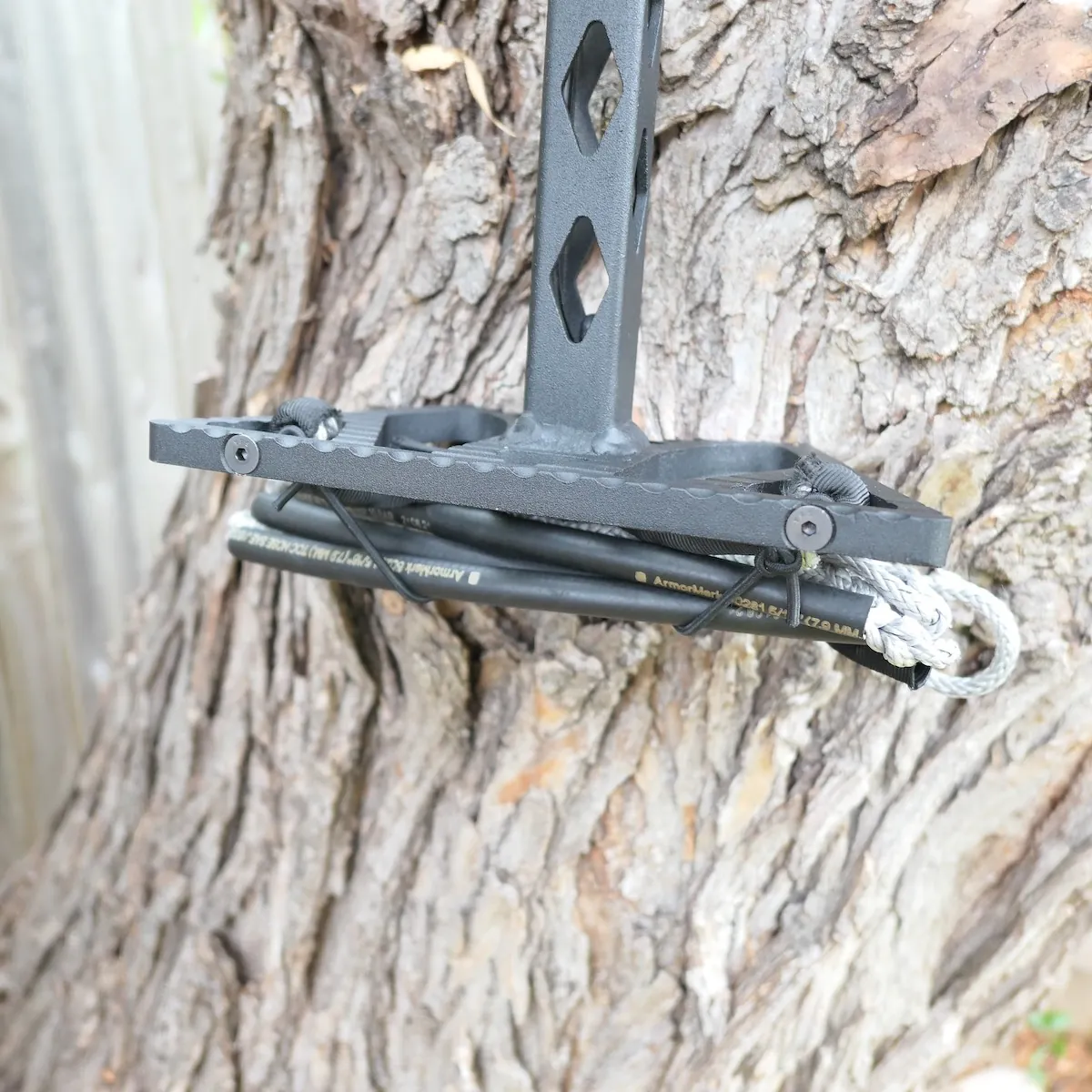
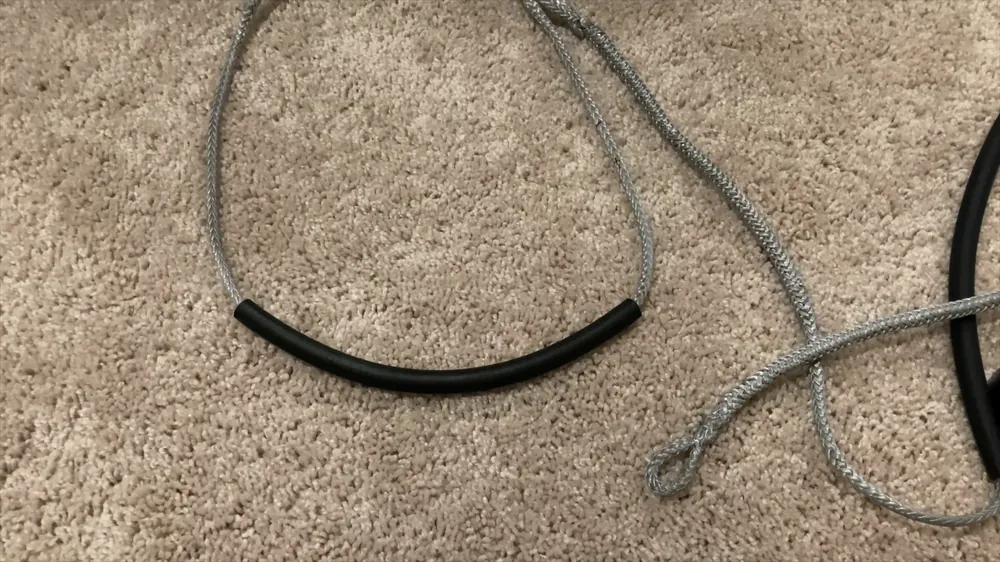
Cut a 9.75″ length of 5/16″ fuel line and thread it onto the Amsteel. Position it at the 10″ center mark to provide a rigid foothold. [00:02:46]
Step 5: Brummel Splice on the Fixed End
Because the first loop and fuel line are already attached, you must use a "fixed-end" Brummel splice for the second loop. Pass the loop through the main line, then pass the tag end through the same hole to remove the twist and lock the splice. [00:04:13]
Step 6: Daisy-Chain the Aiders
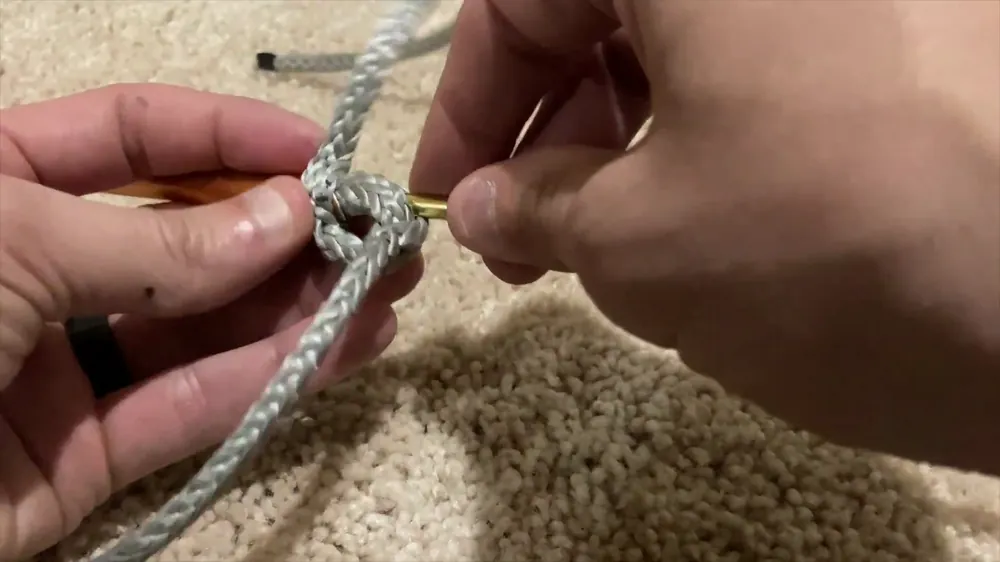
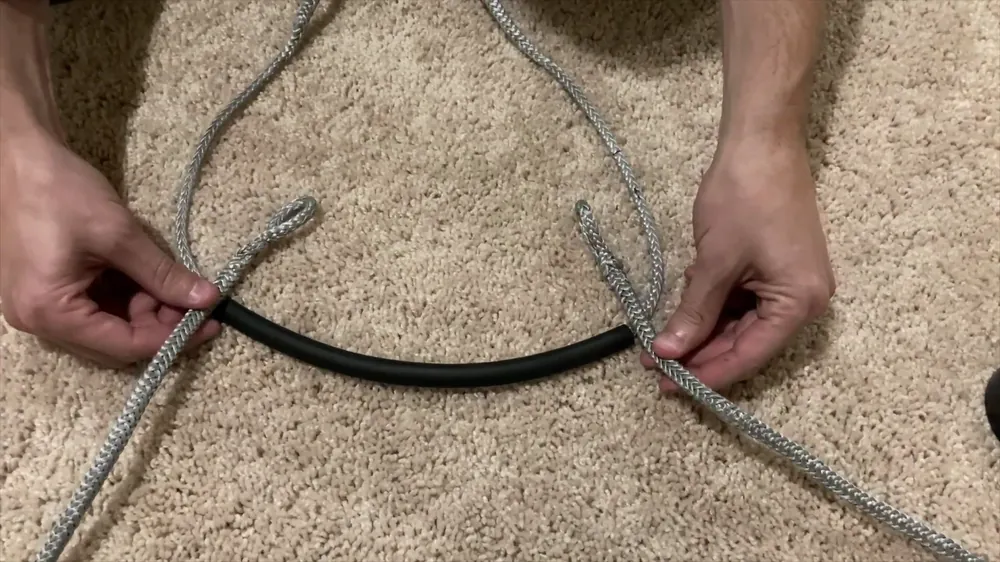
Once you have made multiple modular steps, connect them by threading the loop of the second step through the loosened Amsteel of the first step (just above the fuel line). Pass the loop over the entire aider step to lock the two together. [00:05:14]
Step 7: Add Abrasion Protection
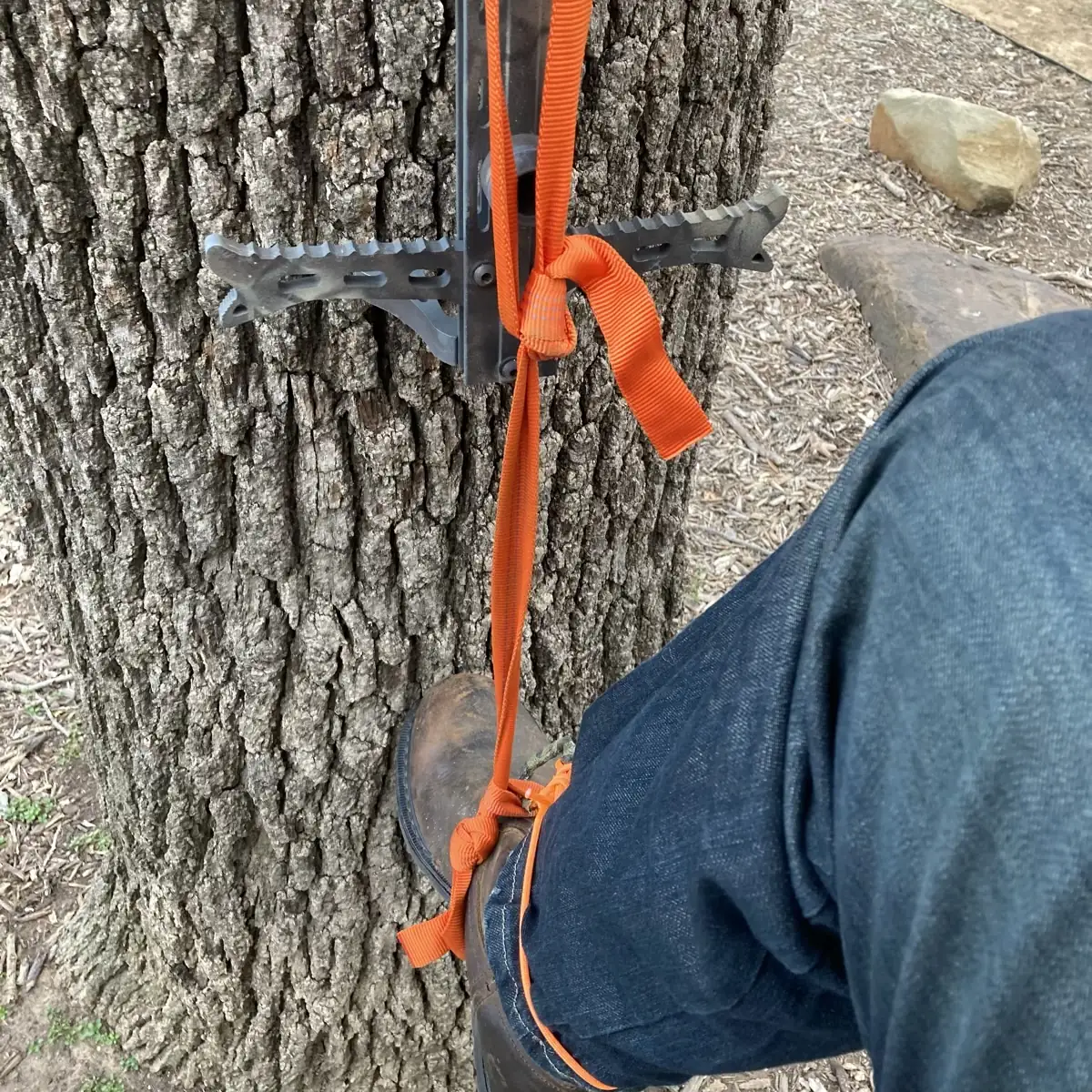
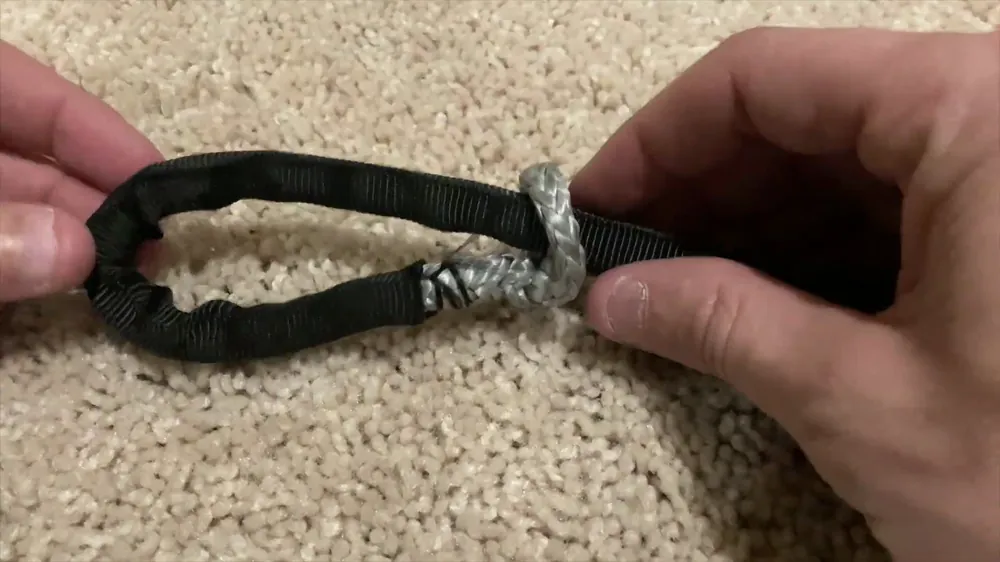
Thread two 18″ lengths of 1″ tubular webbing over the top Amsteel legs. This protects the rope from the sharp edges of the climbing stick rungs. [00:06:24]
Using the Aider
Attach a Stick to Step Up: Use a temporary stick low on the tree to reach high enough to set your primary stick. This allows the bottom step of the aider to sit at your maximum comfortable climbing height. [00:06:57]
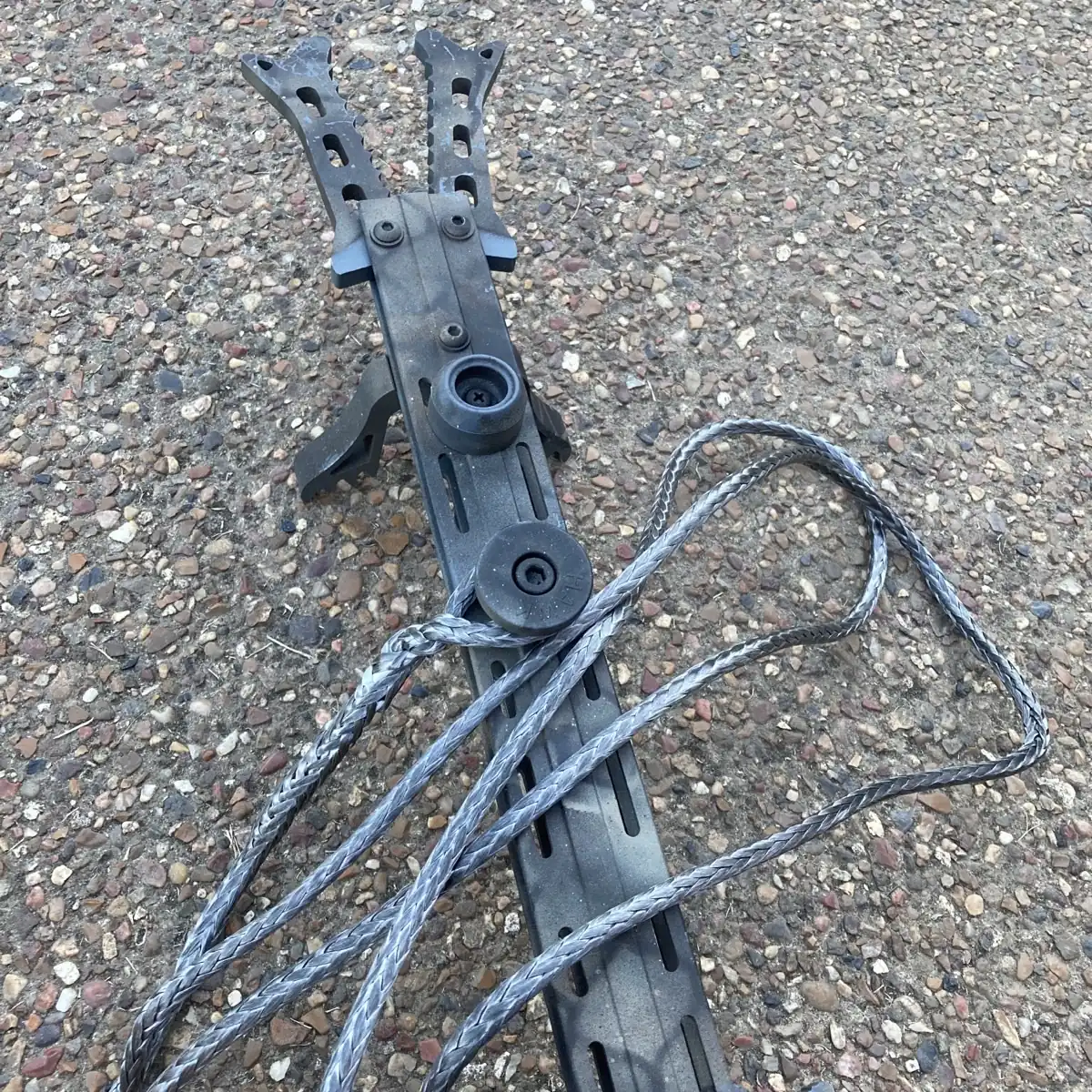
Attach to the Climbing Stick: Slip the aider loops over the bottom rung of your stick using a girth hitch, ensuring the tubular webbing is at the contact point. [00:07:46]
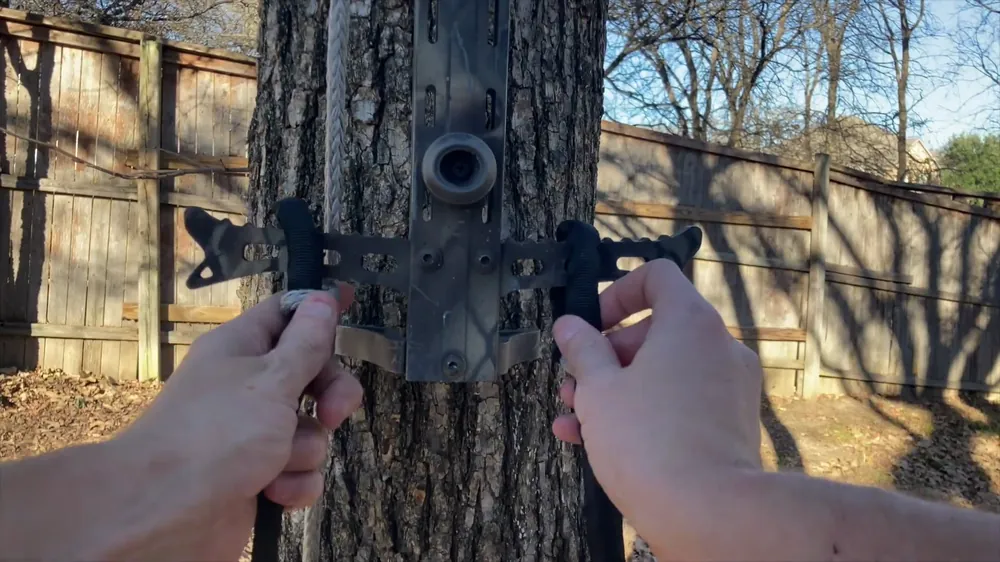
Climb Up: Step into the aider and dig your toe into the tree for stability. Always use a lineman’s belt for leverage. I only recommend using a multi-step aider on the bottom stick. [00:08:13]
Wrapping Up
This setup has worked out great for getting higher with fewer sticks. It’s quiet, modular, and much lighter than carrying extra hardware. Hope it helps y'all!
Materials Needed
(May Contain Links that Earn Commission)
•
5/16″ Fuel Line (for rigidity) (at Autozone)