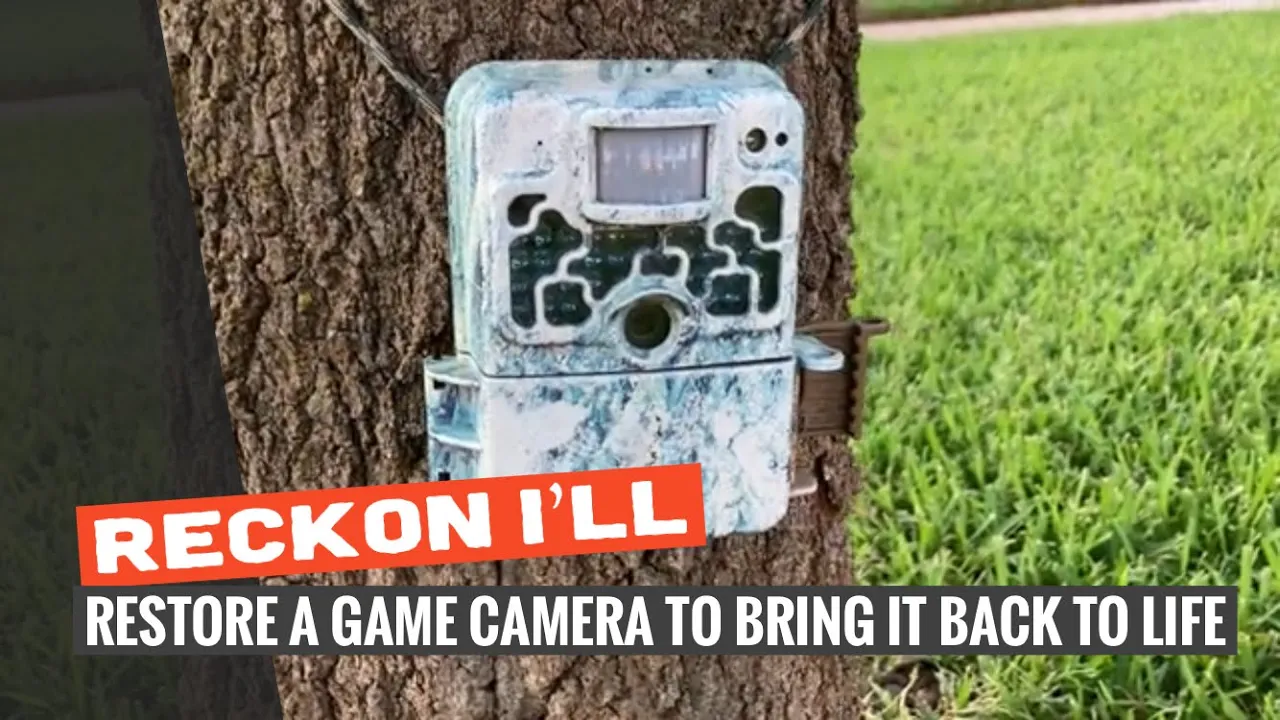
DIY: Repair and Extend the Life of A Game Camera
I only recommend products I believe in and use myself. If you purchase something using a link to an item on a post, I may earn a small commission at no additional cost to you. Read More
Before you toss another camera, do a little bit of investigating and you might find with only a few small tools, you can bring the camera back to life. Even if the camera is beyond repair, I like to hang onto them to salvage future parts. This post is going to focus on a few common fixes to get your game came up and running again.
Common Problems
Battery Issues: Corrosion and drainage.
Electrical Issues: Internal debris and "bugs."
“Motion Sensor” Issues: Cracked PIR covers and lens degradation.
Strap/Lock Issues: Rotting or visible straps.
Battery & Electrical Issues
Battery issues plague everyone. When you have a camera in the elements, things are bound to get corroded. We remedy this by cleaning out the battery tray and contacts with carbonated water or alcohol once per season. [03:00]
Electrical issues usually manifest due to the elements. Your camera literally will have bugs in it: dirt dobbers building nests, spiders building webs, etc. I like to crack open my cameras and clean the boards with a cotton swab and some alcohol to ensure there isn’t any issue. [01:36]
Sensor Issues: Dispelling the Myths
Game cameras use passive infrared (PIR) sensors to detect “warm bodies.” To expand the range, a Fresnel lens is used. Knowing this helps dispel some common myths:
Myth #1: I Don’t Need To Replace My PIR Cover. False. A cracked cover reduces range and leaves the internals exposed to moisture.
Myth #2: I Can Replace My PIR Cover with Brown Packing Tape. False. Tape is not a lens; it lacks the slivers required to amplify infrared signals at a distance. [01:58]
Myth #3: I Can Replace My PIR Cover with a Piece of Plastic. False. Like tape, standard plastic doesn't have the detection range of a specialized Fresnel lens.
Strap/Lock Issues
Sun and elements will eventually rot factory straps. You have two main options:
Method 1: Sew Replacement. Use bar tacks to sew new webbing onto the existing hardware.
Method 2: Replace with Paracord. This is quicker and more discrete. Using camo paracord helps the camera blend into the tree better than a bulky strap. [00:12]
Tip: Use a Uni-Knot (or improved clinch knot) to snug the camera down on the tree. [00:23]
Complete Walkthrough of A Camera “Rebuild”
Step 1: Access the Screws
Many cameras have rubber plugs covering the screws. To remove them without damage, screw a drill bit slightly into the plug and pull upward to back it out. [00:41]
Step 2: Disassemble and Clean
Open the casing and inspect for nests or webs. Use alcohol and a Q-tip to clean the circuit board and the interior housing. [01:05]
Step 3: Replace the PIR Lens
Remove the damaged PIR cover. Cut your new Fresnel lens to size and install it. This is essential for restoring the long-range detection of the camera. [01:29]
Step 4: Reassemble and Seal
Screw the housing back together. To ensure the camera remains waterproof, you can put a dab of hot glue over the screw holes where the rubber plugs were. [00:58]
Materials Needed
(May Contain Links that Earn Commission)